
Foil, Vinyl or Metal: What Is Behind Your Dryer
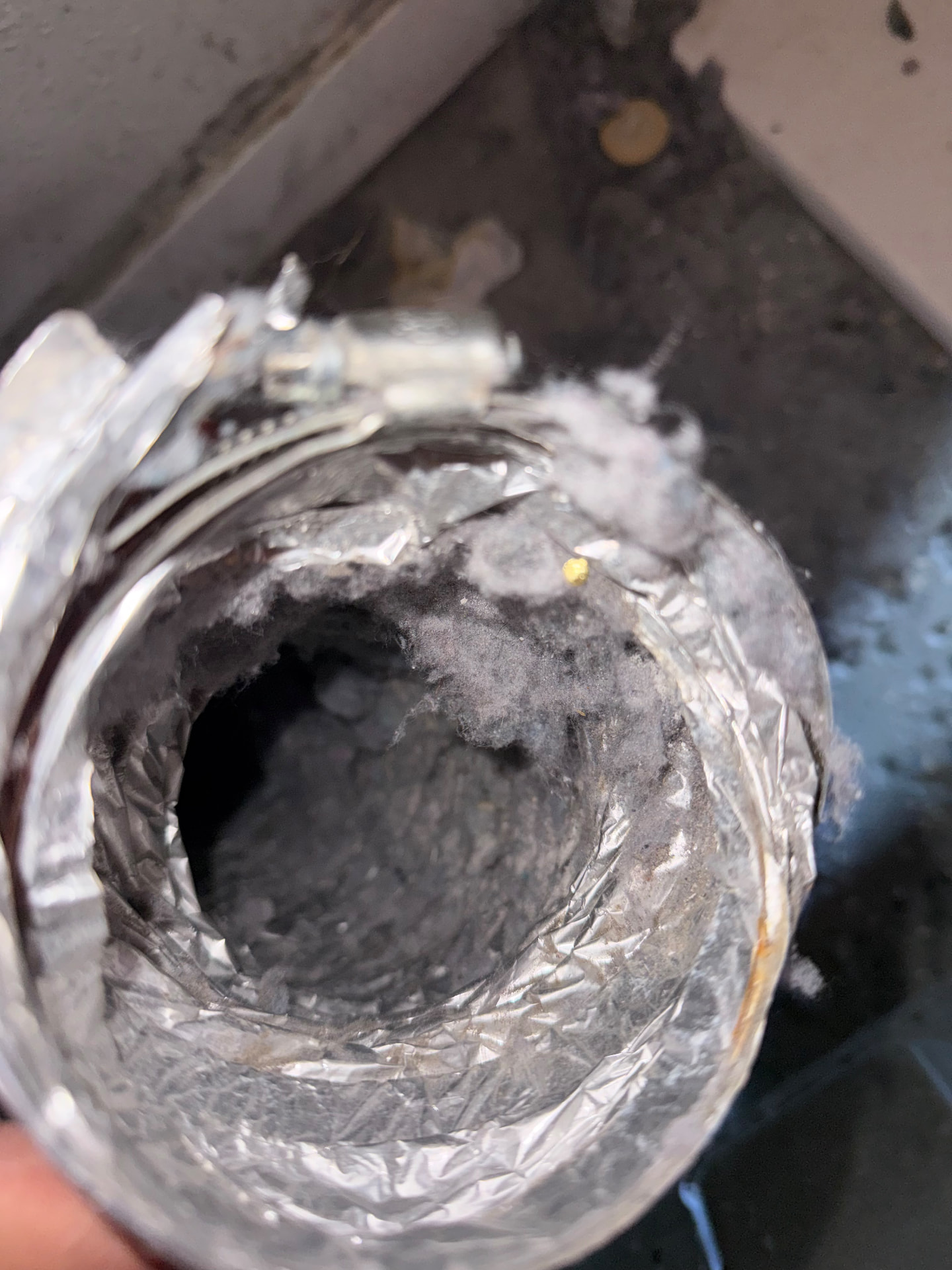
Thin foil and white vinyl hoses crush easily when a dryer is pushed back against the wall, and their ridges trap lint. Many dryer manufacturers call for a metal transition duct; check your dryer’s installation instructions for your model.
A semi-rigid or rigid metal connector holds its shape, so air keeps moving and lint has fewer places to settle.
Signs the Hose Is the Problem
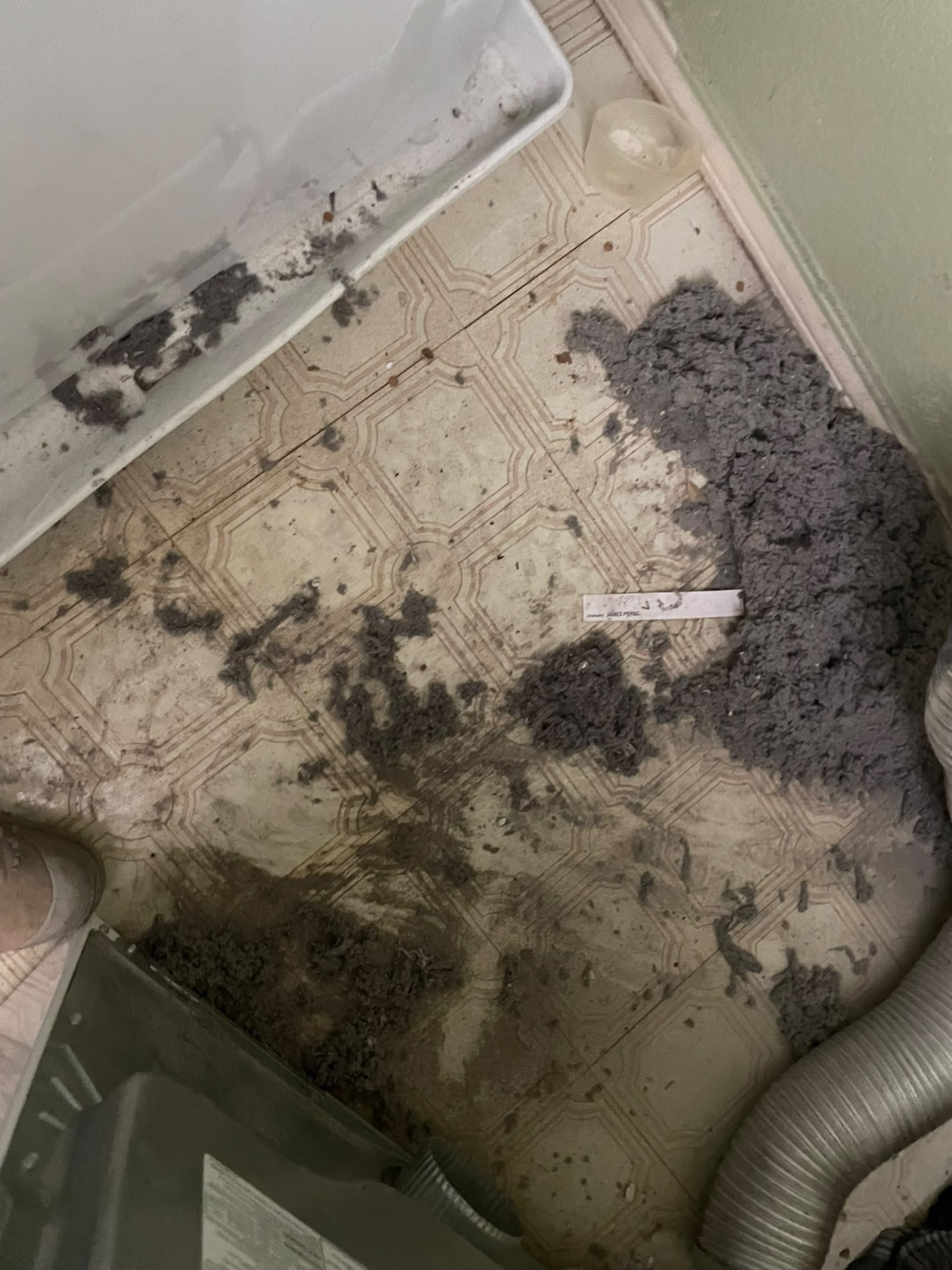
The hose is flattened or kinked behind the dryer. It has a tear or has slipped off the dryer or wall collar. Lint is collecting on the floor behind the machine. Drying got slower right after the dryer was moved.
How We Replace It
We pull the dryer out carefully, remove the old hose, clean both collars, fit a new connector with secure clamps and set the dryer back without crushing it. Then we run it and check airflow at the outside vent.
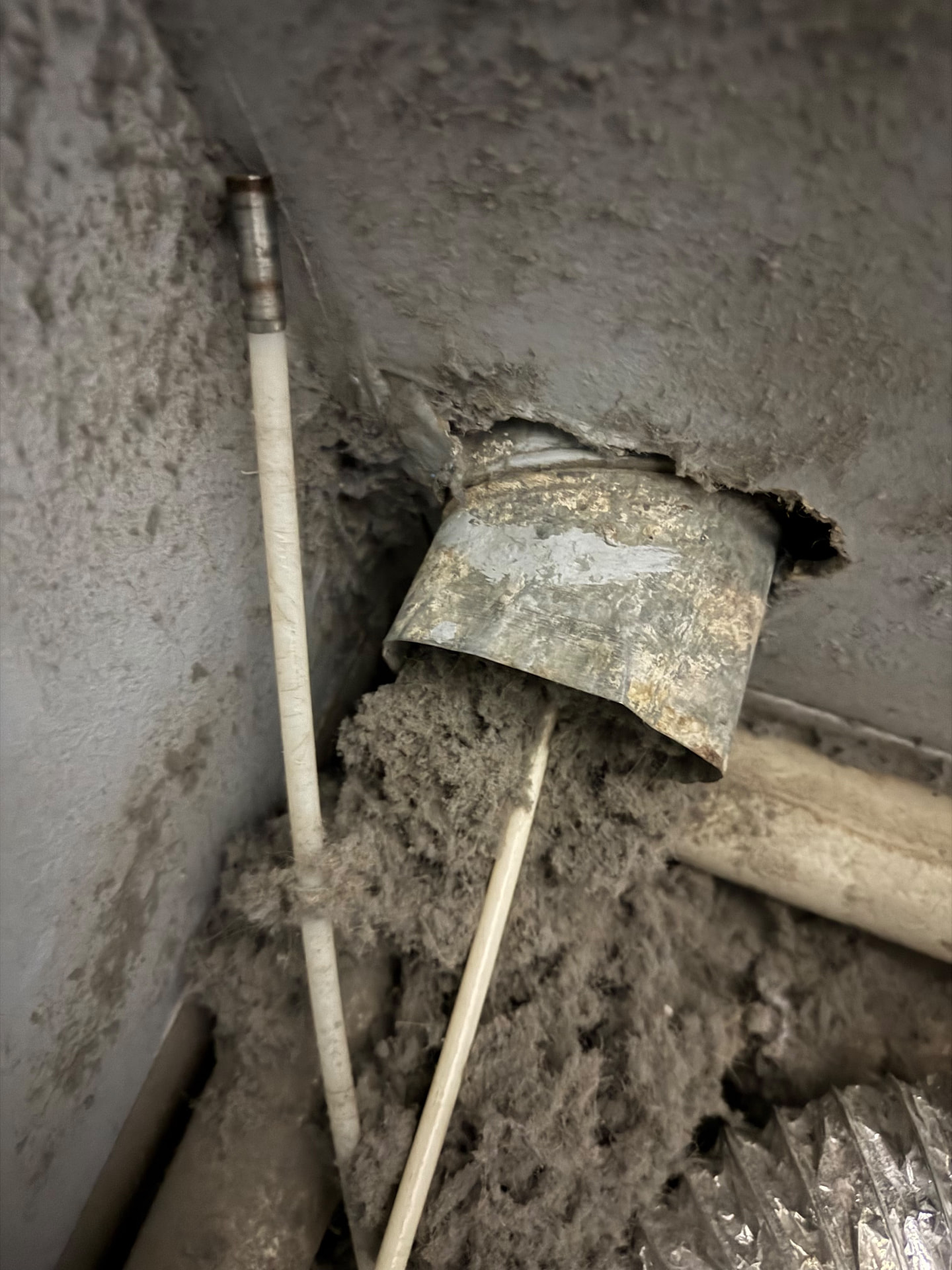
It is usually done alongside a full-line cleaning, since lint from a failing hose often sits further down the duct too.
Tight Laundry Closets
Stacked units and closet laundry leave little room behind the dryer. Shorter, properly sized connectors help, and we will tell you if the space itself is the issue.